Revenue
- Go-To-Market Strategy
- Revenue Operations
- Demand Generation
- Customer Research
- CRM Architecture
- Sales Compensation
- Strategic Partnerships
If you need to figure out which customers and offers actually make money, price and structure deals around that, and build the reporting so you can see it clearly, please get in touch.
Scope of Work
Hi, I am Joaquin. My friends call me Joapo sometimes.
I started as an early hire at NFX, a seed fund that grew from $150M to over $1B in assets while I was there. Since then I’ve worked with founders on what to sell, to whom, and at what price, most recently rebuilding the commercial function at Duco before it was acquired.
These days I run revenue operations for service businesses through Avanza: pricing, offers, what’s converting, and the systems to track it. That usually starts with getting their numbers clean and in one place, so owners can make growth decisions from real data instead of guesses, with AI where it actually helps.
I’ve worked best on small, autonomous teams with a lot to figure out. I take ownership of what I deliver, try new tools early, and dig into why something works, usually with the data.
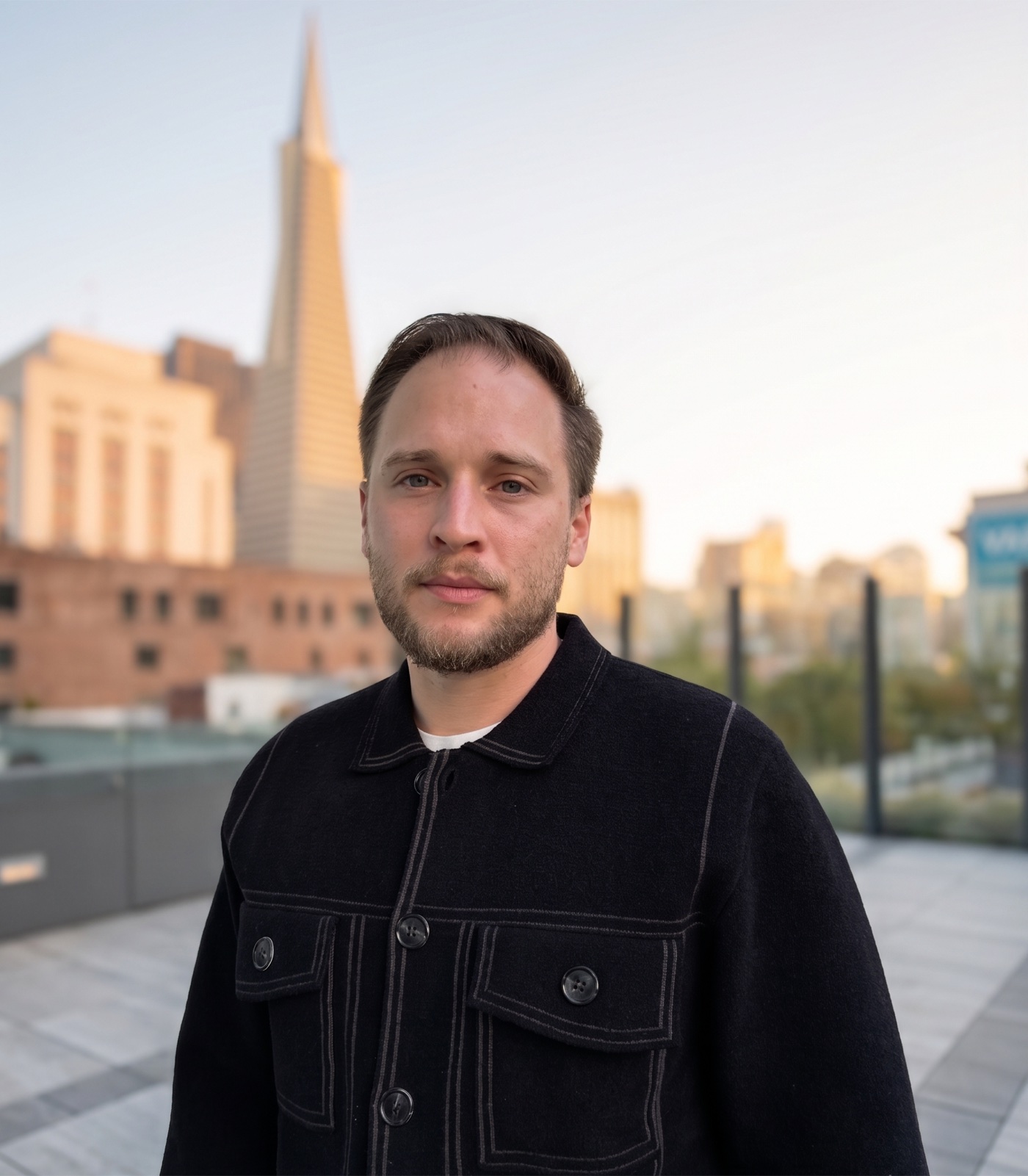
I’m a cross-functional collaborator to say the least…
But in the age of AI, it doesn’t hurt to be capable.
I took this on as a fundraising engagement. They had a new point-of-sale system built into shopping carts so shoppers could check out without a line, and a hard time raising in a market that had stopped funding stories. The problem wasn’t the pitch, it was that nothing had been proven yet. So we stopped trying to sell equity and went to sell the product instead. They had built for independent retailers, but the buyer with the budget and the distribution was the delivery platforms, where the time savings mattered most and the dedicated hardware was an advantage rather than a cost. We repositioned it as a white-label system for those platforms and worked the contact lists we had until we got meetings with the major providers, and one of them bought. They’re live in a few local markets now, and the traction helped them raise more. This is where I stopped thinking of fundraising and sales as separate problems.
2023
Our biggest engagements were dragging. A prospect would take our number away to find budget, come back with different volume or scope, and we’d tell them we needed to revise and get back to them. Every loop cost a week. Pricing was a markup on outsourced labor cost, so scope crept and margin got crushed with no way to see how badly until it was too late. I codified both sides: level of effort and what we’d pay experts, set against cost of living, pedigree and scarcity, and then the variables buyers were actually trading on: scope, complexity, volume, which engagements they bundled. That let us quote on the spot. This scope costs this, that volume costs that, add the other workstream and here’s what it does to the number. Bundling and volume discounts were built in, so I could hand them a better deal and win more work. Every AI training deal we priced after that ran through the model, and those deals stayed around our margin targets, going lower only on pilots. Once scope was agreed, I reviewed the MSA to make sure it covered the work without creating problems later.
2025
We were moving to a new CRM and wanted clean historical data: every deal dated, described, and tied to real revenue. We had a proprietary platform where every project we’d ever delivered was logged, but sales data barely existed and QBO was the only real source to account for revenue by account. So I matched completed projects against money collected and had to be careful with deduplication. I inherited a system with no naming conventions, no consistent statuses, deal amounts that varied by whoever entered them. I designed the structure first, deciding what fields mattered and what was noise, then used AI to spot discrepancies but had to do a lot of normalization by hand or in small chunks that were more rules based. It surfaced over $800K of delivered work, some of it years old and never paid. All of it was recovered by our team.
2026
Every deal at Duco was custom-scoped, so nobody could measure pipeline or forecast until the invoice went out. The account managers who ran our existing clients saw their work as day-to-day conversations, not revenue, and none of them reported to me. I designed the revenue operations underneath: pipeline stages, deal definitions, activity capture, and training for the account managers on spotting expansion. Then I put together incentive packages, approved by the COO, so the system worked for them too. It stuck once leadership backed it, and the whole company adopted it as the system of record.
2025
Our clients didn’t buy recurring engagements. Every project was its own purchase, so lifetime value depended on whether a client came back. I set up a land and expand motion instead. Pilots started around $25K, scoped to the minimum viable project they needed or the most immediate problem we could solve to prove value fast. That gave our contact a quick, easy win to take to their team and get us more budget. The initial scoping usually turned up other ideas, and those came together once we were set up in their vendor system, with incentives built in to extend the work within a set window. The next purchase typically ran about $150K, usually within six months.
2025
When I joined Duco, my mandate was to generate demand through cold outbound. The goal was revenue and pipeline growth, but I joined with no marketing, no sales infrastructure, and no GTM team. Cold pipeline wasn’t going to be how we hit our numbers, but scaling our best performing channel might. So I formalized the referral program: I recruited 15 of our most connected experts, mapped their networks to our target accounts, and set incentives. It produced the intro behind a global streaming platform engagement. In parallel I built signal-based outbound, growing our target list 8x to about 4,000 contacts, timing outreach to news events, and tracking job changes in the CRM, then hired and managed an SDR to run it. That year the team closed about $1M from six new logos you might use every day, about $500K of it from deals I led end to end.
2025
Duco had been around a decade and gone through some positioning evolution so everyone described it differently. On top of that, our work was sensitive enough that we couldn’t talk about it, so there was nothing to point at when someone asked what we did. Every engagement was custom but the mechanism underneath never changed and it worked. I analyzed why our buyers actually bought and the problems we solved for them, and defined four core personas, almost sub-brands. From there we could name what we delivered and let prospects pick the combination they needed. I always thought about it like a Chipotle menu. We were able to build on top of this defined structure. We finally built a website, more of the team could sell, onboarding was easier, proposals got wildly faster to produce, and partners had talking points to hand out. The company had a shape.
2025
As NFX grew its brand recognition and marketing efforts, our inbound deal flow grew with it. My team qualified deals manually because we’d promised every application would get read and evaluated fairly, and that promise was the thing we weren’t willing to break. I collaborated with the product team and the partners to build a rubric and scoring model that defined what good looks like, then we scored all inbound by hand against six core criteria until the model had enough to learn from. Once the workflow was in place I handed it to someone on my team and oversaw it, and deal volume grew 4x while a single headcount still covered it.
2021
I’d spent years tracking investor activity, so I knew who was active and what they liked, and from the other side of the table I knew what made an investor lean in. Meanwhile our founders were stalling between Seed and Series A without a clear read on what they needed to show. I pitched the partners on making fundraising support a real part of the platform team and built the process from scratch. I worked 1:1 with 10 to 15 founders, starting with when they wanted to raise, then worked backward on KPIs, current metrics, and the narrative. I built an investor database with each firm’s preferences, so matching was based on fit rather than who we could remember. Our designer made the decks, partners made the introductions, I was the point of contact throughout focused on improving our graduation rate from seed.
2022
This is what I’m working on now. Owner-operators get their numbers from an accountant once a year, which tells them what happened but not what to do, and most software isn’t built for how they sell. Avanza is revenue operations for service businesses. I clean up their financial and operational data, set up the CRM and field service systems they run on, and build on top of the tools they already use, like Jobber, Housecall Pro and QuickBooks, so owners can see which customers, offers, and prices actually make them money. For a landscape contractor, I used AI to catch up 18 months of books in about a day. Their CPA accepted them at tax time, and they moved to a paid retainer. I’ve also set up reactivation campaigns that target the past customers most worth winning back. They’re live, and results are still coming in.
Present
I got to work with a late-stage fintech based in Mexico. Their IR team was spending hours on work that repeated every week: logging meetings, chasing next steps, preparing for investor conversations that came back to back. I built around the outcomes they cared about rather than the tools: a fundraising CRM in HubSpot with the fields they actually needed, wired to Claude and Google Calendar. Gemini takes notes, Claude updates the record and posts to Slack tagging whoever owns the next step, and a brief lands ahead of each meeting with current research on the participants. Research that took a day takes minutes, and the prep happens whether or not anyone has time to do it. The team has been able to take on scope that used to belong to three separate functions and has secured more internal resources to continue their build out, which was always the goal.
2026
As a small business advisor I noticed that independent food operators were pricing by looking at what the place down the street charges. Nobody was properly tracking sub-recipes, prep labor, or what yield does to a margin, so when costs moved, they found out through a bad month rather than a number. I’d already built this once by hand for a restaurant client: a full audit of their menu, every ingredient and process, modeled so the squishy inputs stayed editable as things changed. Costcina is that model rebuilt as a product: capture the recipe once, keep it current, and see margin per plate whenever you need to reprice. I built it on Next.js and Supabase with the Claude Code CLI, component libraries and skills I set up for the work. About a dozen operators use it now. It was born out of a workshop I used to give on manual costing and portion control and now we have the tool we teach on.
2026
A local florist was tracking every order on paper and losing time to it. I started where I always do, with what she was actually trying to solve for herself, then looked at what existed and decided none of it fit a one-person shop closely enough to be worth the overhead. So I built her something small and specific instead with Claude Code, and I keep it running for her. She uses it daily.
2026
We were collecting portfolio company metrics whenever someone asked for them, which meant we had numbers but no way to compare them. I designed a process to collect, analyze, and report metrics consistently as the portfolio grew from 20 to 120 companies, then indexed companies against each other and against growth benchmarks so we could see who was actually outperforming and plan follow-ons around it. The collection piece started as a template companies updated monthly. Once that proved the shape of what we needed, I found a portfolio reporting startup, led the migration at about 80 companies, and stayed on as a design partner while they built the initial features.
2020
Casa Círculo is my grandmother’s organization and I’ve been around it for over fifteen years, but I only started working more closely with the leadership this spring. They run on their programs, which means nobody had ever owned the money side; revenue arrived through events and whatever donations happened to come in. Donors, students, parents and general contacts all lived mixed together in a Drive that had grown for years without structure. I designed the data model first, then used AI to find duplicates and normalize the data into HubSpot, with integrations to their other tools next. It surfaced thousands of contacts nobody remembered and corrected records for donors who’d moved. They have a base to raise from now, and a roadmap for building the development function around it.
2026
One of my first engagements with the SBDC was with an absentee owner of a senior living operation that was having a bad year and needed to understand why. They had an outside accountant that produced statements but nobody to actually use the numbers to make decisions. All I did was rebuild their year month by month so the trend was visible instead of buried in annual totals. Labor was climbing steadily, and the point it started lined up with a new manager who was mishandling overtime. The owner was able to make the changes and stop the bleed. The swing in bottom line year over year was around $500K with overtime being the big one but I wouldn’t claim it was the only one.
2024
Nothing tagged that way. Clear a filter.